Once you’ve chosen an old PLR/MRR product worth saving, the next step is bringing it up to date. This is where the real value is created. Most old PLR isn’t bad—it’s just frozen in time. The ideas are often solid, but the examples, tone, and formatting belong to another era.
Updating the content doesn’t mean rewriting everything from scratch. It means modernising it so it feels fresh, relevant, and credible in 2026. This post walks you through the exact steps.
Start by removing anything outdated
Old PLR is full of references that instantly reveal its age. Before you add anything new, strip out what no longer fits.
Look for things like:
- Mentions of dead platforms
- Old marketing tactics that no longer work
- Stats from 2008–2014
- Screenshots of outdated software
- Hypey “internet marketing” language
You don’t need to replace everything immediately. Just clear the clutter so you can rebuild on a clean foundation.
Update the examples so they feel current
Examples are one of the fastest ways to modernise a piece of content. You can keep the original idea, but swap in something relevant to today.
For example:
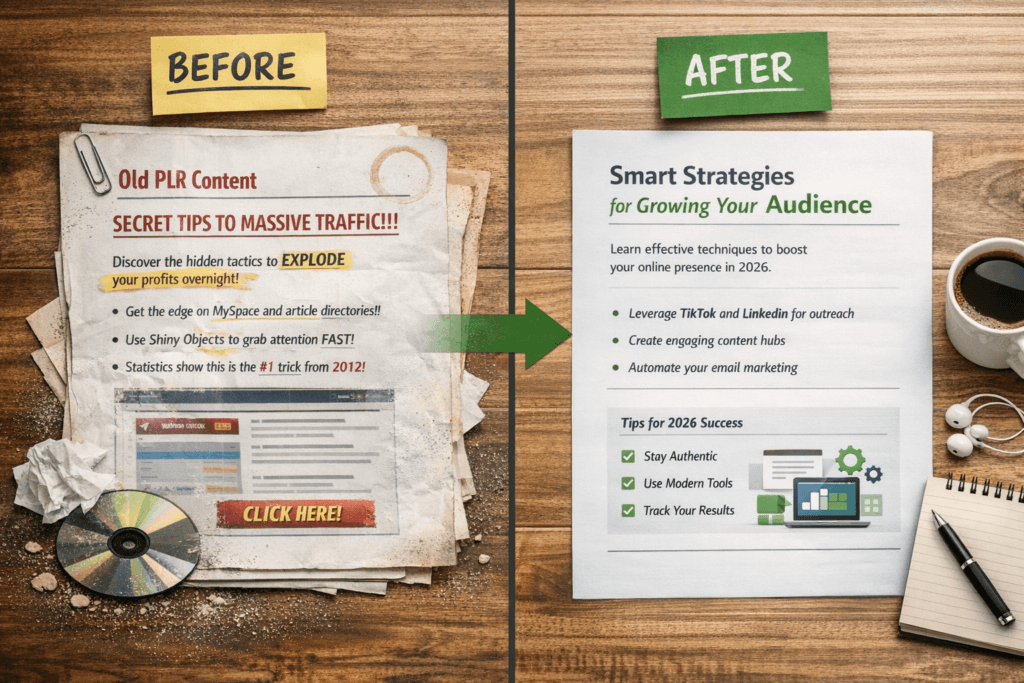
- Replace “MySpace” with TikTok, Instagram, or LinkedIn
- Replace “article directories” with SEO content hubs
- Replace “email blasts” with automated sequences
- Replace “forums” with communities, Discord, or niche groups
The structure stays the same. The examples bring it into the present.
Rewrite the tone so it feels calm and credible
A lot of older PLR uses that classic hype-driven tone:
“You’re about to unlock the secret formula that will explode your profits!”
That doesn’t work anymore. People want clarity, not hype.
A modern tone is:
- Calm
- Practical
- Straightforward
- Conversational
- Helpful
You don’t need to rewrite every sentence. Just soften the hype, remove the shouting, and make the writing feel like a real person talking to another real person.
Add your own insights, experience, or perspective
This is where the magic happens. When you add your own voice, the product stops being “PLR” and becomes your asset.
You can add:
- A short intro explaining why the topic matters
- A personal example or story
- A modern tip or tool you use
- A quick checklist
- A summary at the end
These small touches make the content feel original and trustworthy.
Improve the structure so it’s easier to read
Old PLR often has long paragraphs, cramped text, and no breathing room. Modern content needs space.
Simple improvements include:
- Breaking long paragraphs into shorter ones
- Adding subheadings
- Using bold for key ideas
- Adding spacing between sections
You’re not changing the message—just making it easier to consume.
Add visuals or diagrams where it makes sense
A single image can make an old product feel instantly modern. You don’t need anything fancy.
Useful visuals include:
- A simple flowchart
- A checklist
- A before/after comparison
- A diagram explaining a process
Even one or two visuals can lift the entire product.
Update the formatting to match your brand
This is the final polish. Once the content is updated, make it look like it belongs in 2026.
That means:
- Clean fonts
- Consistent spacing
- Modern colours
- Simple, flat graphics
- No bevels, gradients, or “Web 2.0” effects
This is where your charcoal grey and forest green palette works beautifully. It gives everything a premium, consistent feel.
What you end up with
By the time you’ve done these steps, the product is no longer “old PLR.” It’s a modern, valuable asset that reflects your voice, your standards, and your brand.
And the best part?
You didn’t have to start from scratch.
Our next post will build on this again by showing how to turn your updated content into a complete digital asset—ebook, lead magnet, mini-course, or bonus.