This is so Important. Don’t Waste Time on Rubbish.
Not every old PLR or MRR product is worth your time. Some are genuinely useful, packed with evergreen content and solid structure. Others are thin, hypey, or just plain broken. When you’re sitting on a big archive — like the 2,000‑product Starter Pack inside The Hub — you need a simple way to sort the gold from the gravel.
This post walks you through how to do that. No complicated scoring systems. Just practical, real‑world signals that tell you whether a product is worth modernising or better left archived.
Start with the topic — is it still relevant?
The first thing to check is the subject matter. Some topics age beautifully. Others don’t.
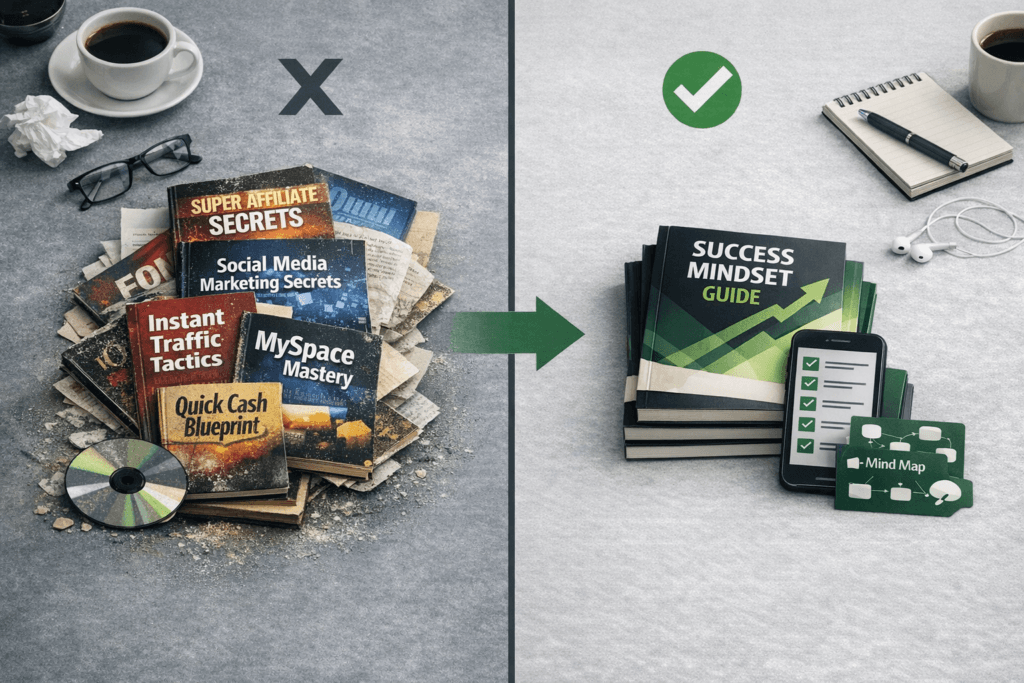
If the product is about mindset, productivity, health basics, relationships, or online business fundamentals — chances are it’s still useful. These are evergreen topics. They don’t expire. You might need to update the tools or examples, but the core ideas still hold up.
On the other hand, if it’s about “MySpace marketing” or “Google+ domination,” you can probably skip it. No amount of rewriting will make it relevant again.
Look at the depth — is there substance?
Some PLR products are just fluff. A few pages of vague advice, no structure, no real value. You’ll know them when you see them.
But others — especially from the better creators in the 2010 era — are surprisingly solid. They have:
- Clear sections and headings
- Actionable advice
- Real examples (even if outdated)
- A logical flow from start to finish
If you find a product like that, it’s worth saving. You can update the examples, tighten the writing, and turn it into something genuinely useful.
Check the formatting — is it fixable
Old PLR often comes in clunky Word documents or PDFs with strange fonts, tiny margins, and graphics that scream “2006.” That’s fine — formatting is easy to fix.
What you’re looking for is structural clarity. If the content is broken into sections, if the paragraphs make sense, if the flow is logical — you can work with it.
If it’s just a wall of text with no headings, no breaks, and no clear structure, it might be more trouble than it’s worth.
Scan the tone — is it salvageable?
A lot of older PLR uses that classic “internet marketing guru” voice:
“You’re about to discover the secret formula that will explode your profits and skyrocket your success!”
That tone doesn’t work in 2026. Buyers want calm, credible, and practical.
But tone is easy to fix. You can rewrite the sales copy, soften the hype, and bring the language up to date. What matters is whether the core message is still useful.
If the product is built around a solid idea — even if the tone is off — it’s worth saving.
Look at the extras — is there a full package?
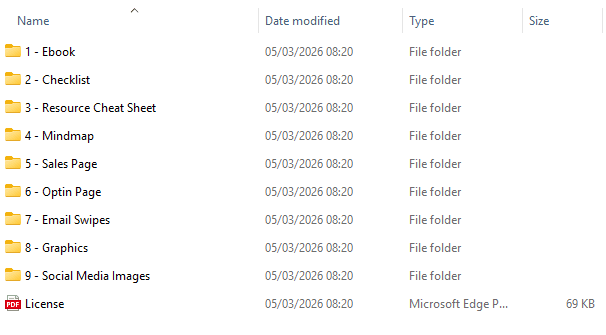
Some PLR/MRR products come with:
A sales page
A squeeze page
Graphics
Email swipes
Bonus reports
Even if they’re outdated, these extras give you a full framework to work with. You can swap the graphics, rewrite the copy, and rebuild the funnel.
If the product is just a single PDF with no support materials, it’s still usable — but you’ll need to build the rest yourself.
Trust your instincts — does it feel like it could work?
Sometimes you open a product and just feel it. The topic is solid. The structure makes sense. The writing isn’t perfect, but it’s fixable. You can see how it could become a lead magnet, a mini‑course, or a bonus.
That’s the kind of product you want to keep.
If you open it and feel confused, bored, or frustrated — trust that too. Archive it and move on.
If you want a second opinion on how to approach PLR in 2026, this article by Assuanta Howard is worth a read:
“PLR is a tool, not a business-in-a-box.”
— PLR Digital Products: What Works, What Fails (linkedin.com in Bing)
She explains why some people succeed with PLR while others waste time and energy. It’s not about the product — it’s about how you use it. That’s exactly what we’re doing here at The Hub: building systems that turn raw PLR into real assets.
What to do next
Once you’ve picked a product worth saving, the next step is updating the content — removing outdated references, adding modern examples, and tightening the writing so it feels fresh and relevant in 2026.
That’s exactly what we’ll cover in the next post.